


We recruited a group of veteran online casino players from across the UK and requested them to put Casino Total Bonuses And Promotions through a comprehensive side-by-side test. One half of the day was spent hunched over desktops; the other half was pure mobile, with smartphones held in hand during commutes and coffee breaks. The goal was clear: determine whether the desktop or mobile version of Total Casino provides the best all-around gambling experience. Our testers assessed everything from initial load times and menu logic to the captivating quality of live dealer tables and the ease of withdrawing winnings. What resulted wasn’t a predictable landslide victory for either camp. Instead, a interesting split developed, depending on specific tasks that each platform performed remarkably better than the other. Provided with a checklist of common player actions, we logged hours of real-money play to distinguish meaningful advantages from superficial quirks. Before you make your next bet, discover which device truly earns your screen time. This is what happened when we challenged Total Casino’s dual platforms to their limits.
Laying the Foundation for Our Multi-Device Test
Our testing panel consisted of eight UK-based players, each with at least three years of online casino experience. We provided the same Total Casino accounts loaded with a reasonable balance to ensure equity. The desktop setup employed a variety of Windows PCs and Macs running Chrome and Safari, while mobile testing happened on both iOS and Android devices, mainly iPhone 14 and Samsung Galaxy S23 handsets. Crucially, we assessed on both Wi-Fi and mobile data networks, such as those supplied by EE and Vodafone, to mimic real-world conditions like a living room session or a train journey from Leeds to London. Each tester performed a systematic series of tasks: registering, depositing, finding a specific slot, playing 20 spins, launching a live blackjack table, contacting support, and cashing out. We measured every action, noted friction points, and compiled subjective comfort ratings. We even simulated poor signal conditions by throttling bandwidth, because no UK player should anticipate perfect 5G everywhere from Cornwall to the Highlands. This systematic approach allowed us to identify performance differences that casual users might ignore but that greatly influence long-term enjoyment.
Account Creation and Account Verification Rapidity
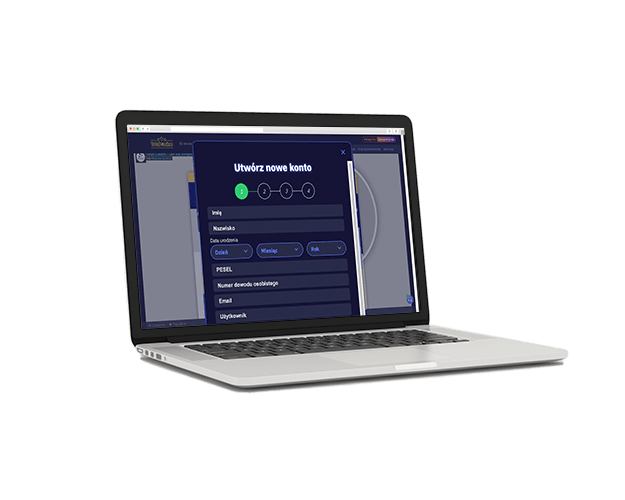
We timed the complete sign-up journey from landing page to validated account on each platforms. On mobile, the complete process took just four minutes and twelve seconds, with the camera-based document upload bypassing the need to switch devices. Desktop registration took closer to seven minutes because the verification required a separate email with attachment links, and our testers repeatedly fumbled with scanner apps. The mobile site also provided a one-tap “Auto-Fill Address” function that fetched UK postcode data from the device’s keyboard, a small luxury that gained precious seconds. No tester quit the registration on both platform, but the mobile flow seemed more modern and lenient, notably for players joining during a lunch break. The desktop version, however, offered a clearer summary screen before final submission, which older testers appreciated for reducing errors. We recorded that the SMS verification code was delivered immediately on both platforms, and the welcome bonus was credited within seconds no matter the device. Still, the mobile path secured a decisive victory in this category, demonstrating that Total Casino has perfected its sign-up funnel for the smartphone generation without harming desktop security.
Touch-Optimized Functions: Touch-Based Controls and Fast Rounds
Total Casino’s mobile version stands out when addressing the rhythm of modern life. We found a suite of touch-centric features that desktop simply cannot replicate. The most lauded was the “Quick Spin” toggle, which allowed players to accelerate reel stops with a double-tap, effectively halving the duration of a 20-spin session. The mobile lobby also included a “Recently Played” carousel that reacted to swipe gestures, making it easy to jump back into yesterday’s preferred slot. Portrait-mode play, offered for most slots, let testers hold the phone with one hand and spin with a thumb while sipping a coffee with the other. During our commute simulation, the session timeout was extended slightly on mobile, accounting for that players might lock their screen between stops. The deposit process on mobile further capitalised on the device’s capabilities, offering Apple Pay and Google Pay as one-touch options that avoided card entry entirely. These integrations made topping up a balance feel as frictionless as buying a song on iTunes. Our testers noted that these mobile-first enhancements transformed what could have been a compromised experience into a truly distinct, even superior, way to play for brief, unplanned sessions.
Slot Execution and Visual Processing
We ran a dozen well-known slots, including “Gonzo’s Quest,” “Big Bass Bonanza,” and “Reactoonz,” on both platforms to assess visual fidelity and responsiveness. Desktop computers with dedicated graphics cards offered the smoothest animations, with particle effects and reel spins running at a buttery 60 frames per second. Mobile devices, even the iPhone 14, occasionally dropped frames during high-action bonus rounds when complex background animations activated. However, the mobile versions of these slots were not simply scaled-down ports; they featured touch-optimised spin buttons and gesture controls that enabled players swipe to change bet levels, providing a layer of tactile engagement that desktop lacked. The immediate feel of pulling a virtual lever with a finger gave mobile play a visceral edge, especially in portrait mode. We also noticed that mobile game loading times were marginally slower on 4G, averaging 4.1 seconds versus 2.4 seconds on a wired desktop connection. Still, the visual gap has shrunk dramatically over the past two years, and our testers rated the mobile graphics as “excellent” for smartphone standards. Ultimately, desktop took the lead on sheer technical performance, but mobile stole the show for casual, fidget-friendly play that seems native to the device.
Slot Collection Access and Finding Speed
Locating a certain title like “Starburst” or “Monopoly Live” exposed clear contrasts in browsing approach. On desktop, the left-hand sidebar provided a full category tree with options for studio, variance, and bonus purchase options, enabling users to navigate deeper with a mouse. Our reviewers could browse 40 game icons at once because of the wide display, and the search bar sat visibly in the top-right corner, showing predictive results as they entered text. The app, by contrast, used a bottom navigation bar with symbols for slots, live casino, and table games, plus a collapsible filter drawer. Navigating the mobile lobby was fast, but the compact display meant only eight game icons were visible at a time, demanding more swipes. The mobile search tool functioned properly, but the keyboard occupied half the interface, occasionally obscuring the outcomes. Several testers commented that the desktop experience felt like a curated library, whereas mobile felt like a well-organised pocket catalogue. To measure the variation, we timed how long it took to locate and open the game “Book of Dead.” Desktop scored 8.3 seconds, mobile 11.8 sec. The desktop benefit increased when applying multiple options simultaneously, a task that became awkward on a mobile screen.
Live Dealer Immersion: The Benefit of a Large Monitor
When we unveiled Total Casino’s live blackjack and roulette broadcasts, the desktop experience right away proved its larger footprint. The HD video feed occupied the display, letting us to view the dealer’s facial expressions and the texture of the felt without squinting. A multi-camera angle on desktop gave us the classic wide shot plus a close-up of the wheel or card shoe, and the chat window remained comfortably to the side without crowding the game. On mobile, the same stream was clear and reliable, but the interface required a choice between viewing the table clearly and using the betting grid. In landscape mode, the bet buttons overlaid the bottom portion of the video, and in portrait mode, the feed shrank to a postage stamp above the chips. The chat feature on mobile was a cramped messaging ordeal that few testers bothered to use. That said, mobile’s capacity to spin a live roulette wheel from a park bench in Edinburgh brought a layer of novelty that no desktop could match. The audio quality through headphones was superb on both platforms, but the sheer visual drama of a live game show like “Crazy Time” achieved its peak on a 27-inch monitor. For dedicated live casino play, desktop is the unquestioned champion.
First Impressions and Registration Process
Firing up Total Casino on a desktop instantly gave our testers a feeling of sprawling possibility. The large screen real estate let the full brand colour palette and high-resolution hero banners to stand out, creating a casino floor atmosphere even from a home office in Birmingham. Registration, however, was quicker on mobile. The mobile site cleverly condenses the form fields into a single vertical scroll, with a tap-friendly numeric keypad for phone numbers and a quick biometric login option, cutting roughly 30 seconds off the registration time compared to desktop. Desktop users, meanwhile, were met with a multi-step form spread across several pages, which felt slightly clunky on a 24-inch monitor. The mobile welcome flow also included ID verification via camera capture, capturing a passport photo in seconds, whereas desktop users had to manually upload scanned files. Once logged in, the desktop lobby presented a panoramic game grid that made browsing feel like window-shopping on Oxford Street, while mobile deployed a card-based layout that prioritised thumb reach. Both generated a positive first impression, but testers unanimously agreed that mobile onboarding felt engineered for speed, while desktop catered to explorers who want to soak in the atmosphere before selecting a game.
Financial and Cashout Processing on Each Platform
We examined deposits and withdrawals using debit cards, PayPal, and bank transfers to assess platform efficiency. The deposit process was uniformly smooth, but mobile again leveraged its native payment ecosystem. Apple Pay users on iPhone executed a £20 deposit in under three seconds via Face ID, while desktop users had to by hand enter card details unless they had saved them in the browser. Withdrawal requests, however, introduced a divergence. The desktop site presented a full transaction history with expandable rows, simplifying to track pending cashouts and verify amounts at a glance. On mobile, the same information was available but required scrolling through a compact list, which felt less transparent. The actual withdrawal processing time was the same regardless of device, with PayPal withdrawals hitting our testers’ accounts in under six hours on average. We also remarked that the mobile site offered a dedicated “Withdraw” button in the bottom navigation bar, while desktop buried it inside a dropdown menu. This subtle design choice indicates that Total Casino expects mobile users to cash out more frequently. The verification for larger withdrawals, such as uploading a bank statement, was again simpler on mobile due to the camera integration. Overall, mobile provided a speedier deposit-to-play pipeline, while desktop gave superior oversight for those who want to scrutinise every transaction.
Support Service Experience Using Platforms
Our ultimate task involved getting in touch with live chat support to resolve a fictitious bonus query. The way to connect varied: on desktop, a hovering chat icon stayed pinned to the bottom-right of every page, whereas mobile hid the live chat link inside a hamburger menu, requiring two extra taps. Once in touch, the chat interface on desktop was roomy, with a broad window that displayed the agent’s responses and our message history without the need to scroll back constantly. On mobile, the chat window split space with the keyboard, leading to the conversation to feel compressed. The response time was around 42 seconds on desktop and 47 seconds on mobile, a insignificant difference. However, the mobile experience was boosted by the capability to snap a screenshot of the issue and attach it directly from the phone’s gallery, a feature we used to accelerate the diagnosis. The support agent solved our query on both platforms in under four minutes, and the tone remained consistently professional. We concluded that while desktop offers a more comfortable environment for a lengthy troubleshooting session, mobile’s on-the-go support is perfectly enough for quick fixes, especially when you can send visual evidence with a couple of taps.